
- 3
May
Changing a CMOS (BIOS) Battery
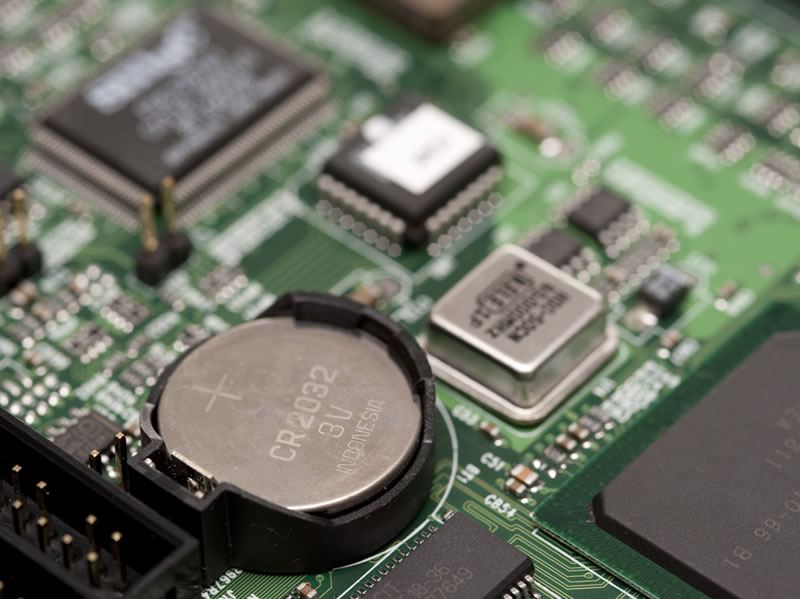
The CMOS battery (also called the BIOS battery or motherboard battery) is the small coin cell on your motherboard that keeps the clock and your BIOS settings alive while the PC is switched off. When it runs flat the computer can lose the correct time and date, show error messages, or fail to start properly. It typically lasts several years, and on an older PC it is common to need a new one after around five.
Symptoms of a failing CMOS battery
- The clock or date is wrong after a restart or power cut
- “CMOS checksum error – defaults loaded”
- “CMOS battery low” or “CMOS wrong memory size”
- “No operating system” or the PC won’t boot until you re-enter the BIOS settings
- “CPU overclocking failed” or “New CPU has been installed” messages
If you see these, the CMOS battery is probably flat and it is time to replace it.
Step 1: Save your BIOS settings
Open the BIOS screen and note all the settings on a piece of paper (or take photos). Don’t change anything. You will use this to check everything is correct after the new battery is fitted.
Step 2: Identify the CMOS battery
The CMOS battery is a thin, round, button-like cell. It can sometimes be hidden by expansion cards or cables. On older PCs it may be a cylindrical shape. The most common type is the CR2032:
- CR – lithium battery
- 20 – 20mm diameter
- 32 – 3.2mm thickness
This type is easy to find and inexpensive. Laptops can differ: the CMOS battery is often a small cell on a short cable, and getting to it can mean taking the laptop apart.
Step 3: Remove the old battery
- Turn off the PC, unplug the power cable and take off the case.
- Discharge any static electricity by touching a metal part of the case.
- Lay the system unit down horizontally so the positive side of the battery is visible.
- Gently release the battery from its holder without forcing it or touching other parts of the motherboard (see your motherboard manual if unsure).
- Buy a replacement of the same type (usually a CR2032) from a local retailer, and dispose of the old one at a battery recycling point.
Step 4: Fit the new battery
Place the new battery in the holder the right way up (positive side up for a CR2032) and make sure it sits firmly.
Step 5: Check the BIOS and reset the clock
- Start the PC and enter the BIOS.
- Set the correct date and time.
- Compare the settings with the ones you noted in step 1 and correct any that differ.
- Save and exit.
If the clock still resets with a new battery, or the problem continues, there may be another fault with the motherboard, and it is worth having it looked at.
Need a hand? Lennox IT provides IT support for businesses in Derby, Nottingham and the East Midlands, and supports customers and sites across the UK. Get in touch or see our IT support plans.
Last reviewed: October 2026.